
The Self Assessment deadline has a way of making January feel even shorter.
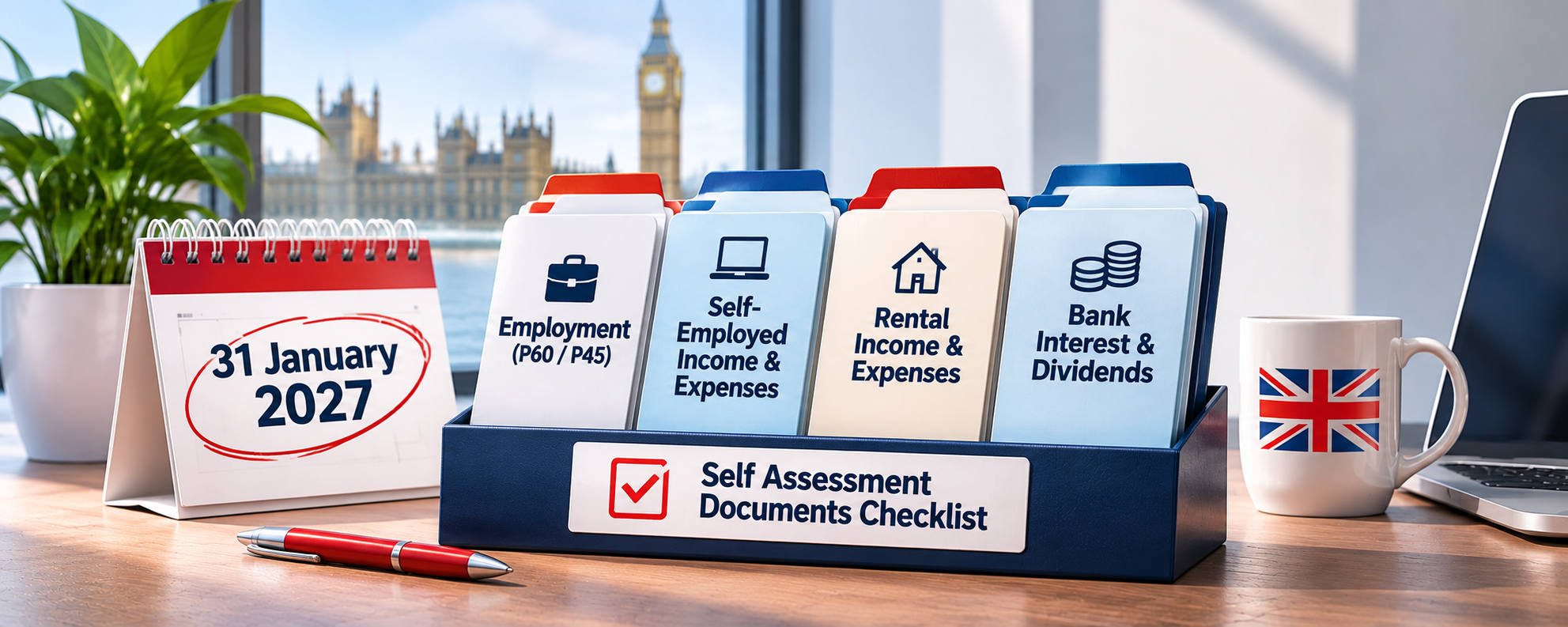
If you need to file a tax return for the 2025/26 tax year, you have until 31 January 2027 to submit it online and pay any tax you owe.
But waiting until January to find your paperwork can turn a straightforward tax return into a stressful search through emails, bank statements, invoices, and forgotten receipts.
The easiest way to avoid that last-minute rush? Get your documents organised early.
Whether you're employed, self-employed, a landlord, or earning income from investments, this Self Assessment checklist covers five key groups of documents to gather before filing your return.
1. Who Needs to File a Self Assessment Tax Return?
Self Assessment is HMRC's system for collecting Income Tax from people whose income or circumstances mean they need to report it themselves.
You may need to submit a tax return for 2025/26 if you:
- Were self-employed as a sole trader and earned more than £1,000 before expenses.
- Were a partner in a business partnership.
- Received rental income that needs to be reported.
- Had taxable savings interest, dividends, or other untaxed income.
- Had Capital Gains Tax to pay after selling or disposing of an asset.
- Need to pay the High Income Child Benefit Charge and do not pay it through PAYE.
- Received foreign income that needs to be reported.
- Were asked by HMRC to complete a tax return.
Your circumstances matter, so check HMRC's guidance if you're unsure whether you need to file.
Important Self Assessment dates for 2025/26
| Date | What you need to know |
| 6 April 2025 | Start of the 2025/26 tax year |
| 5 April 2026 | End of the 2025/26 tax year |
| 31 October 2026 | Paper tax return deadline |
| 30 December 2026 | Deadline to submit online if you want to pay through your tax code, where eligible |
| 31 January 2027 | Online filing and tax payment deadline |
| 31 July 2027 | Second payment on account deadline, if applicable |
You can submit your online tax return from 6 April 2026. There's no need to wait until January.
What happens if you miss the deadline?
HMRC applies an initial £100 late-filing penalty if your return is submitted after the deadline, even if you have no tax to pay or have already paid the tax you owe.
If your return remains outstanding, further penalties can apply. Late payment can also result in interest and separate payment penalties.
Getting your documents ready early gives you more time to check everything before submitting.
2. Document 1: P60 or P45 (Employment Income)
If you worked for an employer during the 2025/26 tax year, you'll need details of your employment income and the tax already deducted.
Your main documents are:
- P60: Shows your total taxable pay and Income Tax deducted by an employer during the tax year.
- P45: Shows your pay and tax details when you leave a job during the year.
- Payslips: Useful for checking your earnings, tax deductions, bonuses, and other payments.
- P11D: If your employer provided taxable benefits, such as private medical insurance or a company car, this may contain relevant information.
If you changed jobs during the year, you may have more than one P45 or P60 to consider.
Make sure you include income from all relevant employments rather than relying on just your most recent payslip.
3. Document 2: Self-Employed Income and Expenses
If you're a sole trader or freelancer, your tax return needs to reflect your business income and allowable expenses for the tax year.
Start by gathering:
Business income records
- Sales invoices and receipts.
- Records of payments received.
- Bank statements showing business transactions.
- Details of income received through online platforms or payment providers.
Business expense records
- Receipts for business purchases.
- Software and subscription costs.
- Business travel and mileage records, where allowable.
- Office and equipment expenses.
- Relevant phone and internet costs.
- Professional fees and other business expenses.
Don't forget to include income from every relevant source, not just payments received into your main business bank account.
You should also separate personal spending from business expenses. Not every purchase made while working qualifies as an allowable business expense.
If you use your home for business, certain household costs may qualify for relief depending on how you work and the method used to calculate the expense.
Tip: Keep your records organised by category throughout the year. It makes it easier to identify missing information and avoid overlooking legitimate expenses.
4. Document 3: Rental Income and Expenses
If you earn income from renting out property or land, you'll need records of your rental income and relevant expenses.
Gather:
- Rental statements from your letting agent.
- Records of rent received directly from tenants.
- Mortgage interest statements.
- Property maintenance and repair invoices.
- Letting agent and management fees.
- Insurance and other relevant property costs.
- Records of any periods when the property was vacant.
It's important to distinguish between different types of property expenses. For example, repairs and improvements may receive different tax treatment.
Also, mortgage interest for residential property lets is generally dealt with through a basic-rate tax reduction rather than being deducted as an ordinary rental expense.
If you own more than one rental property, organise the records separately so you can identify the income and expenses associated with each one.
Landlords should also consider whether Making Tax Digital for Income Tax applies to them. More on that in Section 8.
5. Document 4: Bank Interest and Dividend Statements
Employment and business income aren't the only figures HMRC may need.
If you received savings interest or dividends during 2025/26, gather the relevant statements and tax certificates.
These may include:
- Bank and building society interest certificates.
- Savings account statements showing interest received.
- Dividend vouchers from UK companies.
- Investment platform tax statements.
- Details of relevant foreign interest or dividends.
Remember that not all savings interest or dividend income is automatically taxable. Personal allowances and tax-free allowances may apply depending on your circumstances.
However, you should still identify the income and check whether it needs to be reported on your return.
If you hold investments across several platforms, collect statements from each relevant provider rather than relying on a single account
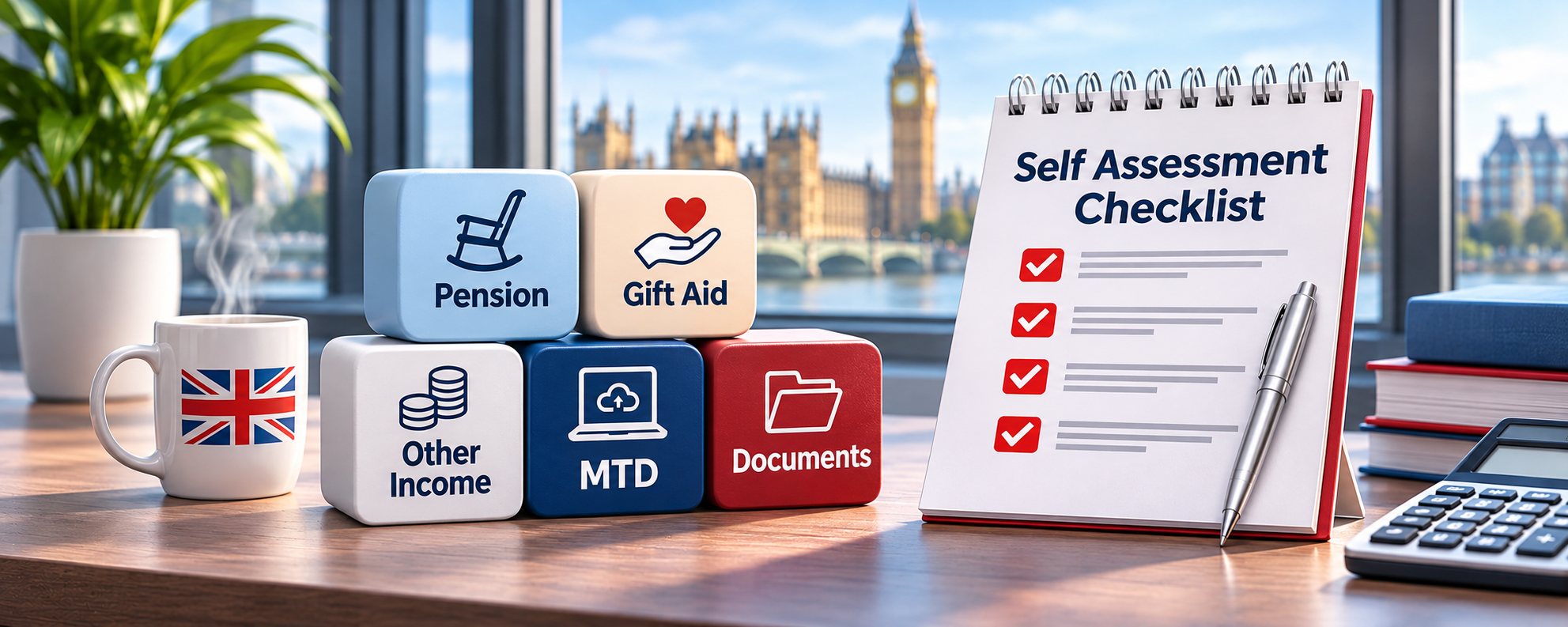
6. Document 5: Pension and Gift Aid Payments
Certain pension contributions and charitable donations may affect your tax calculation or help you claim tax relief.
Gather:
Pension contribution records
- Personal pension contribution statements.
- SIPP contribution summaries.
- Receipts or confirmations for relevant contributions.
- Details of contributions not made through your employer's payroll.
Gift Aid records
- Charity donation receipts.
- Gift Aid confirmation emails.
- Records of qualifying donations made during the tax year.
These details can be particularly important if you're a higher-rate taxpayer or have income affected by the personal allowance taper.
The tax treatment depends on the type of pension contribution and how it was made. For example, workplace pension contributions through salary sacrifice or a net-pay arrangement are treated differently from personal contributions made under relief-at-source arrangements.
Keep the supporting documents so your accountant can identify the correct treatment.
7. Other Details People Often Forget
The five document groups above cover many common situations, but your tax return may require additional information.
Before submitting, check whether any of the following apply:
- Student loan repayments: Include relevant details if you have a student or postgraduate loan.
- Child Benefit: You may need to report information relevant to the High Income Child Benefit Charge.
- Capital Gains Tax: Gather purchase and sale records for assets such as shares or property, along with relevant costs and supporting documents.
- Foreign income: Include details of overseas income and any foreign tax paid.
- Previous payments on account: Check how much you've already paid towards your tax bill.
- Other income: Consider taxable benefits, tips, commission, or other income not already covered.
One important point about payments on account: these are advance payments towards your next tax bill, not additional expenses. Check your HMRC account and previous tax calculations so the payments are correctly taken into account.
8. Already Using Making Tax Digital? Here's What You Need to Know
Making Tax Digital for Income Tax began on 6 April 2026 for eligible sole traders and landlords with qualifying income above £50,000.
If you're affected, you'll need compatible software to maintain digital records and send quarterly updates to HMRC.
However, there's an important transition to understand:
Your 2025/26 tax return is still submitted through the usual Self Assessment process by 31 January 2027.
That's because the first MTD reporting year covers 2026/27, not 2025/26.
So, even if you've already started sending quarterly updates for the new tax year, you still need to prepare and file your 2025/26 return as normal.
Your quarterly updates also don't replace the final annual tax return. You'll still need to review your figures, include other relevant income, make adjustments where necessary, and submit the final return.
9. Your Printable Self Assessment Checklist
Use this checklist to make sure you've gathered the main information before filing your 2025/26 tax return.
- Employment income: P60, P45, payslips, and relevant P11D information.
- Self-employed income and expenses: Sales records, invoices, receipts, and business bank statements.
- Rental income and expenses: Rental statements, mortgage interest details, maintenance invoices, and agent fees.
- Savings and investments: Bank interest certificates, dividend vouchers, and investment statements.
- Pension and Gift Aid: Pension contribution statements and charitable donation confirmations.
- Other income and tax details: Student loan, Child Benefit, capital gains, foreign income, and previous payments on account.
- HMRC access: Check that you can access your HMRC online account and have your relevant details available.
You don't necessarily need to send every receipt or statement to HMRC when you file. You do need accurate figures and supporting records, which you should keep in case HMRC asks to see them.
Let 4Future Accountancy Help You Prepare
Your Self Assessment tax return doesn't have to become a January headache.
At 4Future Accountancy, we help individuals, freelancers, sole traders, landlords, and business owners understand their tax responsibilities and prepare their returns accurately.
Whether you need help organising your records, identifying allowable expenses, or completing your Self Assessment return, getting support early can make the process much easier.
Don't leave it until the last minute.
Book your free 30-minute consultation with 4Future Accountancy and get ready for the 31 January 2027 deadline.
Frequently Asked Questions
What documents do I need for a Self Assessment tax return in the UK?
Common documents include your P60 or P45, self-employment income and expense records, rental income statements, bank interest and dividend statements, and pension or Gift Aid records. Your exact requirements depend on your income and circumstances.
What is the Self Assessment deadline for 2025/26?
The deadline for submitting an online Self Assessment tax return and paying the tax due is 31 January 2027. The paper filing deadline was 31 October 2026.
Can I file my Self Assessment tax return early?
Yes. You can submit your 2025/26 online tax return from 6 April 2026. Filing early gives you more time to check your figures and plan for any tax payment.
Do I need to send receipts to HMRC with my tax return?
Generally, you don't submit all your receipts with your return. However, you must keep accurate supporting records in case HMRC asks to check them.
Can an accountant complete my Self Assessment tax return?
Yes. You can appoint an accountant or tax adviser as your authorised agent to help prepare and submit your return. You'll still need to provide accurate information and review the figures before submission.