Making Tax Digital (MTD) for Income Tax started on 6 April 2026 for landlords and sole traders whose qualifying income was more than £50,000 in the 2024/25 tax year.
If you are a landlord, it is important to understand whether the new rules apply to you, when you need to start, and what you need to do to prepare.
If MTD applies to you and you have not yet signed up, it is important to take action now.
What Is Making Tax Digital for Landlords?
Making Tax Digital for Income Tax is HMRC's new system for reporting income and expenses digitally.
For landlords who are required to use MTD, you will need to keep digital records of your property income and expenses and use compatible software to send quarterly updates to HMRC.
You will still need to submit an end-of-year tax return and pay your tax by the usual deadline.
Importantly, MTD is based on your gross qualifying income, not your rental profit.
This is one of the most important points for landlords to understand.
When Does MTD Apply to Landlords?
MTD for Income Tax is being introduced in stages.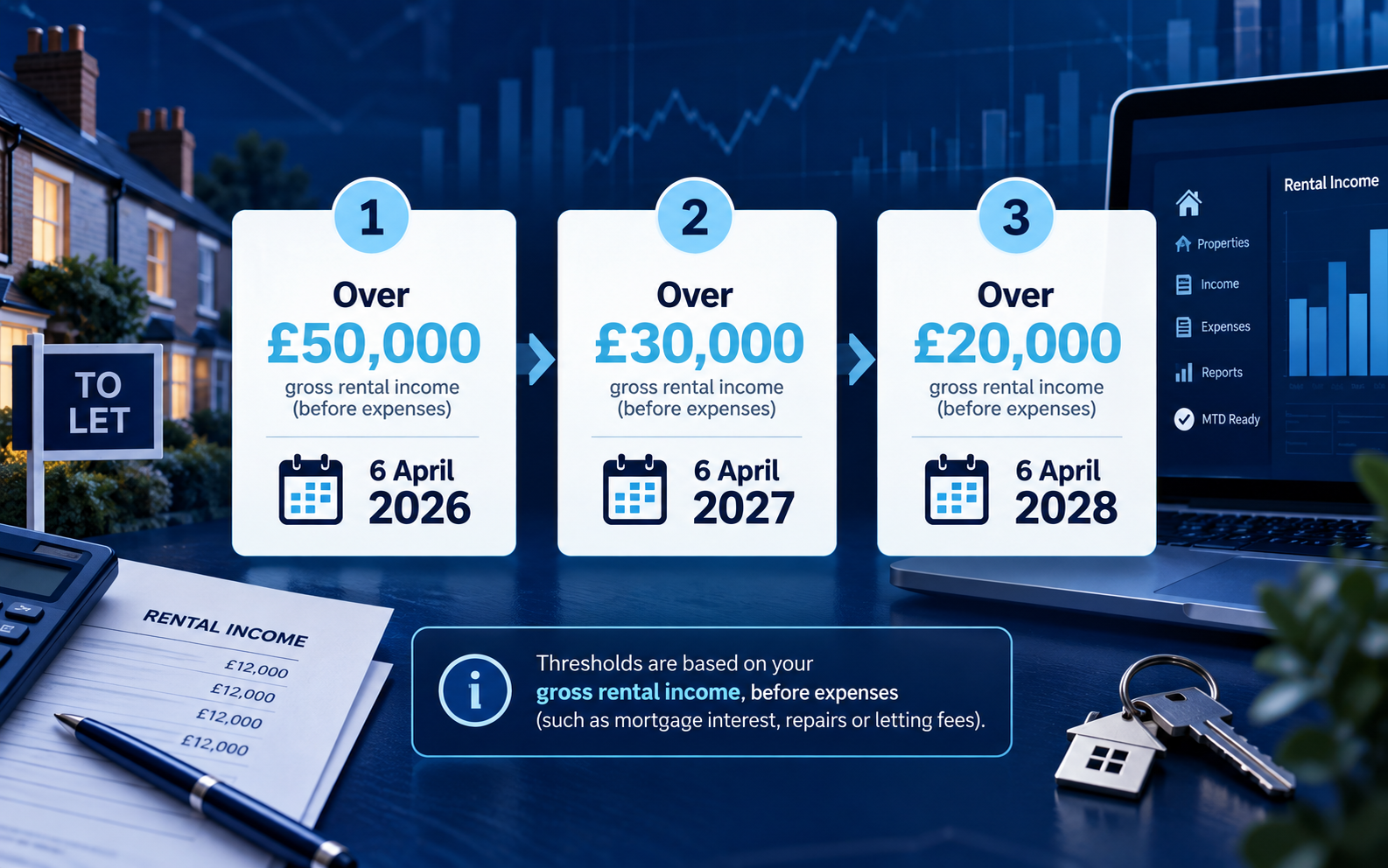
| Qualifying income tax year | Qualifying income | MTD starts |
| 2024/25 | More than £50,000 | 6 April 2026 |
| 2025/26 | More than £30,000 | 6 April 2027 |
| 2026/27 | More than £20,000 | 6 April 2028 |
The thresholds are based on gross qualifying income before expenses and tax, rather than your taxable profit.
For example, if you receive £55,000 of rental income but your allowable property expenses are £20,000, your qualifying income is still £55,000.
Therefore, you could be required to use MTD even though your taxable rental profit is considerably lower.
What Are Quarterly Updates?
For the 2026/27 tax year, the quarterly update deadlines are:
- 7 August 2026
- 7 November 2026
- 7 February 2027
- 7 May 2027
Quarterly updates provide HMRC with summaries of your property income and expenses. They are not quarterly tax returns and do not mean you pay tax four times a year.
MTD does not replace your annual tax return; you will still complete your year-end tax reporting and pay any tax due by the normal deadline.
The first quarterly deadline, 7 August 2026, has already passed. If you were required to submit an update and have not yet done so, you should submit it as soon as possible. HMRC will not apply penalty points for late quarterly updates during the 2026/27 tax year, although penalties can still apply to late tax returns and late payments
From September 2026, HMRC is also beginning to sign up taxpayers who should already be using MTD but have not signed up themselves.
Do Landlords Need to Keep Digital Records?

Yes.
If you are required to use MTD, you will need to keep digital records of your property income and expenses using compatible software.
You can continue to use spreadsheets for your records, but you will need compatible bridging software to connect those records to HMRC and meet MTD's digital-link requirements. Paper-only record keeping will not meet the MTD digital record requirements.
Your records should be maintained throughout the year so that your quarterly updates can be prepared accurately and efficiently.
What If I Have Rental Income and Self-Employment Income?
This is particularly important.
The MTD threshold is based on your combined qualifying income from self-employment and property, rather than looking at each source separately.
For example:
- Rental income: £35,000
- Sole trader turnover: £20,000
- Combined qualifying income: £55,000
In this example, the combined qualifying income is above £50,000.
Therefore, the MTD rules may apply even though neither individual source is above £50,000.
Are Any Landlords Exempt From Making Tax Digital?
Some landlords may be exempt from Making Tax Digital for Income Tax. This can include people who are digitally excluded, as well as certain taxpayers who qualify for automatic or temporary exemptions under HMRC's rules. If you think an exemption may apply, check the current HMRC guidance or speak to a tax adviser before assuming that you need to use MTD.
How Can Landlords Prepare for MTD?
A good starting point is to get your property records organised now.
1. Calculate your gross rental income
Look at your property income for the relevant tax year before deducting expenses.
2. Review your property expenses
Make sure you have records and supporting documents for your property-related costs.
3. Organise your property records
If you own multiple properties, keep your records organised so you can understand the income and expenses relating to your property portfolio. For MTD purposes, multiple UK properties are generally treated as one UK property business, so separate MTD records are not normally required for each individual property.
4. Choose compatible software
You will need software that works with MTD for Income Tax. HMRC does not provide the software itself.
5. Consider using an accountant
An accountant can help you determine whether you are affected, organise your records, choose an appropriate system and manage the reporting process.
How 4Future Accountancy Can Help
At 4Future Accountancy, we help landlords understand their Making Tax Digital obligations and keep their property finances organised throughout the year.
Our support can include:
- MTD registration and setup
- Digital bookkeeping
- Quarterly MTD submissions
- Self Assessment
- Property tax and landlord accounting support
If you are unsure whether MTD applies to you or need help preparing your records, contact 4Future Accountancy to discuss your requirements.